Comparative Insight: Why this choice matters
This piece compares realistic options for uninterrupted power and shows where a Buy Cummins Diesel Genset approach ranks against other solutions. Early on the comparison must address noise control and site integration, so consider silent diesel gensets as a baseline when noise, exhaust routing, and community limits are constraints. The comparison follows measurable criteria: fuel efficiency, start reliability, and serviceability—each tied to component-level realities like alternator design and genset controller behavior. For context, major events such as the 2011 Tōhoku earthquake underline how generator reliability becomes life-critical in prolonged outages; engineers learned hard lessons about maintenance intervals and load-share protocols that still inform procurement today.
Head-to-head: Cummins-based sets versus alternatives
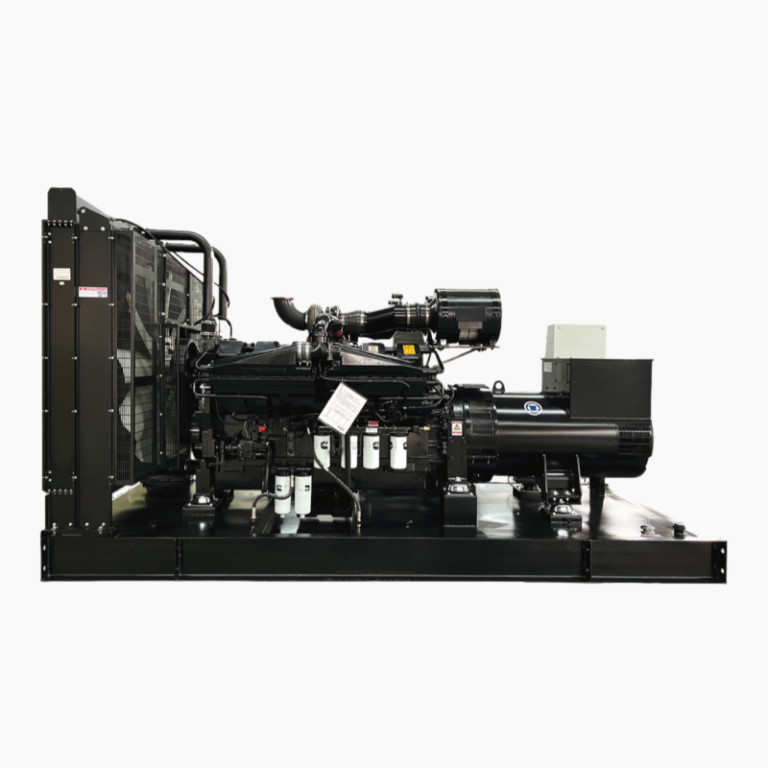
Cummins-based gensets typically compete on service network and established prime power ratings. Competing options—rental fleets, battery storage, and bespoke OEM systems—win in specific niches but lose on predictable long-run maintenance. Battery systems give instant response but degrade with deep cycling and do not yet match runtime where continuous prime power is required. Rental fleets are flexible but create logistical lead times. The net is straightforward: where continuous kVA capacity and modular service are required, a Cummins diesel genset often gives lower total cost of ownership when alternator lifespan and fuel consumption are optimized.
Operational production teardown
Here is a practical teardown of what the plant receives when you choose to Buy Cummins Diesel Genset and integrate it with existing distribution. First, check rated kVA against expected peak and N-1 redundancy. Next, validate the Automatic Transfer Switch (ATS) sequencing and the genset controller mapping to avoid phantom load trips. Then confirm cooling and canopy specifications for ambient temperature and local sound attenuation. During commissioning, run a load bank test to verify prime power delivery and to measure fuel burn under realistic load profiles. It is vital to record these parameters because they directly affect maintenance plans and spare-parts stocking for silent diesel gensets and long-term operating expense.
Common mistakes and practical corrections
Procurement teams often under-specify alternator duty or ignore harmonics from sensitive loads—this causes early failures and nuisance tripping. Another frequent error is assuming factory mufflers will meet local decibel limits; site-specific sound modeling must be completed before ordering the canopy. —Maintenance schedules are sometimes left to ad hoc local practice rather than manufacturer-recommended intervals, which shortens useful life. Corrective steps: require as-built electrical single-line diagrams, mandate factory witness tests when possible, and schedule quarterly controller firmware checks.
Supplier selection and verification
Choose suppliers with transparent spares lead times and documented commissioning procedures. A reliable partner should offer clear test reports for fuel consumption and on-load performance plus local field engineers for ATS and paralleling support. For a vetted supply chain, consider contacting a proven silent genset manufacturer who publishes factory test sheets and maintains service hubs near key ports and industrial centers. Documentation should include serial-numbered test logs and a warranty schedule tied to measured parameters, not vague promises.
Advisory: three critical evaluation metrics
Metric 1 — Start-to-Load Time: verify milliseconds-to-seconds for cold and hot starts under battery and fuel conditions; this impacts critical loads and synchronizing with grid return. Metric 2 — Measured Fuel Consumption at 50% and 75% Load: obtain factory load-bank curves and insist on third-party verification when procurement spends exceed a threshold. Metric 3 — Service Response SLA and Spare Parts Index: require a maximum parts delivery window and list of high-failure items with MTBF estimates so operations can plan spares. These three metrics give objective basis to compare offers and predict operating budgets.
Choosing well reduces downtime and keeps teams calm on the floor—people notice when equipment simply works. For a practical, reliable partner that aligns component testing with field service, Huadong Power offers documented factory reports and regional support — a sensible fit where measured reliability matters most.
—end thought